Apply and pay for a home EV charging channel

You can apply and pay for permission to have a new electric vehicle (EV) charging channel installed at a residential property.

What is an EV charging channel?

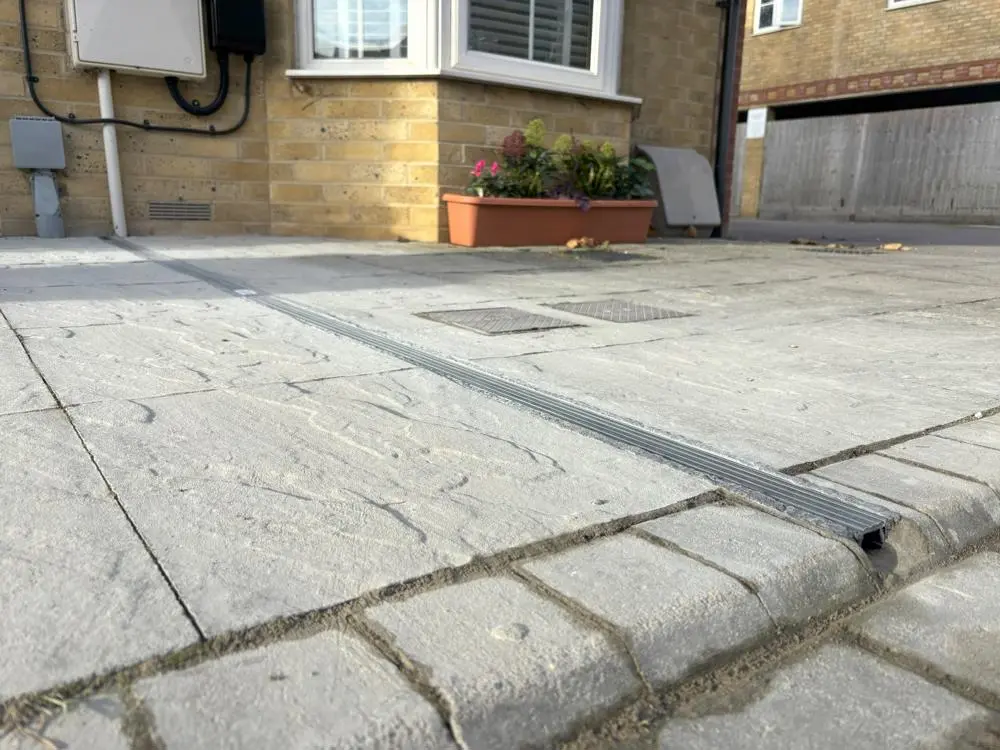
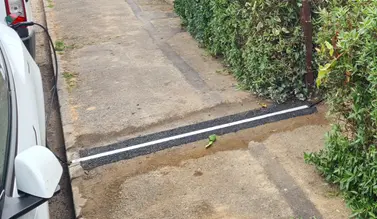
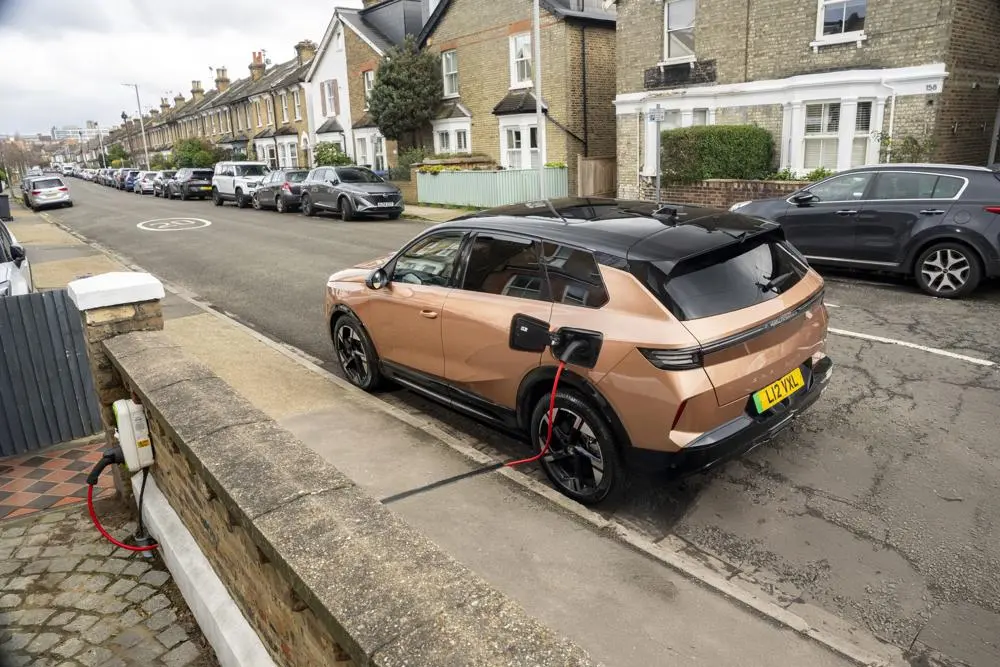
An EV charging channel is a narrow channel installed across the pavement, at right angles to the road. It safely holds your charging cable so it does not create a trip hazard.

This allows you to charge your electric vehicle using a charge point at your home.

The highway includes the road, pavement and grass verge. You must have permission from us to carry out any work on the highway.

EV charging channels can be installed in a pavement, but not in a grass verge. They provide a safe link between your parked vehicle and your home charging point.

You must not run a cable across a pavement without permission as it is an offence, according to the Highways Act 1980 section 162 and section 178.

Public on-street chargepoints

Plug in Suffolk is an initiative by Suffolk County Council which is currently installing public chargepoints that anyone can use to charge their electric vehicles.

You can find out where current chargepoints are in Suffolk, as well as where some are planned to be installed.


Apply for a home EV charging channel

  1. You must:

    • own the property, or have written permission from the owner
    • live at the property
    • have a concrete pr tarmac pavement that is no bigger than approximately 2 metres in width, grass verges are currently not suitable
    • ensure that your EV charger, when installed, does not overhang the footway/pavement (this can happen if the front wall of your house opens straight onto the pavement)
    • be able to park legally on the road directly outside your property, with only a footway separating your property from the road
    • use the EV channel with an EV charger that is 7.5 kilowatts or less
    • use a suitable EV charging cable that fits safety within the EV channel
    • have the EV channel installed on a raised kerb
    • have a pavement that is higher than the surface of the road to ensure that water drains away from the channel

    Please do not assume that your application will be approved.

    Other considerations

    You must:

    • agree to cover the council's costs if someone makes a claim against the council because of your EV charging set-up, rather than the council paying them.
    • make sure that a registered electrician installs your EV charger and that all equipment meets the minimum standard requirements.

    Unsuitable EV locations

    • Applications for a channel/charger will be refused if there is any electrical street furniture nearby, such as lampposts, BT cabinets or traffic lights.
    • Applications will also be refused if another residents' EV cable channel is within 2.5 metres of your charging vehicle. This may mean that neighbouring properties may be unable to have an EV cable channel.
    • Applications may be refused if there is a parking restriction in place, such as double or single yellow lines, bus stops, zig zag lines, taxi ranks, or if you are within 1- metres of a junction. You can check if there are Suffolk County Council traffic orders happening near you.
    • Applications may be refused if parking would not be safe or compliant with the Highway Code (opposite or in proximity of a junction, unless in a marked parking bay, or if poor visibility).
    • Applications may be refused if you want an EV channel installed within 1 metre of a tree or pedestrian barriers

    New EV channels can't be installed too close to another EV channel, no less than 2.5 metres.

    Please note that each application will need to be assessed in relation to the surrounding infrastructure, street furniture and existing EV channels.

    They also can't be installed if it will be less than 400 metres away from a public chargepoint. You can see where your nearest chargepoint is on our map.

    Please note that we may not approve/install a new residential EV channel if it's within 400 metres or a 5 minute walk away from a public chargepoint.

    For the installation of the EV channel within the pavement, you must:

    • pay £210 for an assessment and approval
    • pay a £50 annual fee for the charging channel to be installed
    • pay any installation costs from an accredited contractor
    • pay any installation costs from an accredited contractor (who will also complete a TMA roadspace booking form for £50)
    • check/get planning permission for the external charging unit on your property.

    This application process is only suitable for EV Channels for one residential property.

  2. The EV home charger unit must be installed by a qualified contractor who holds a NRSWA qualification, and has £5 million public liability insurance.

    These EV channels suppliers can provide a ‘supply and fit’ service, or a ‘supply only’ for you to then arrange installation by a contractor with a NRSWA certification.

    Types of charging channels

    You can contact the EV channel suppliers below. They can install your chosen EV channel once you've received approval from Suffolk Highways.

    Charge Gully

    Kerbo Charge

    Gul-E

    Charge-Gully electric vehicle installation constructed within a pavement
    Charge-Gully installation
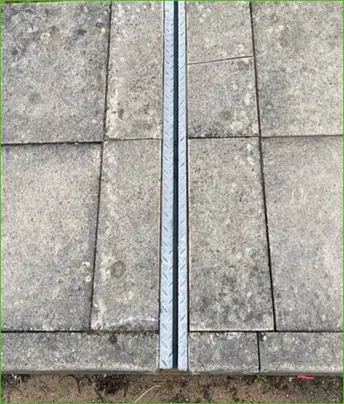
    Kerbo Charge installation 1
    Kerbo-Charge installation
    Kerbo Charge installation 2
    Kerbo-Charge installation
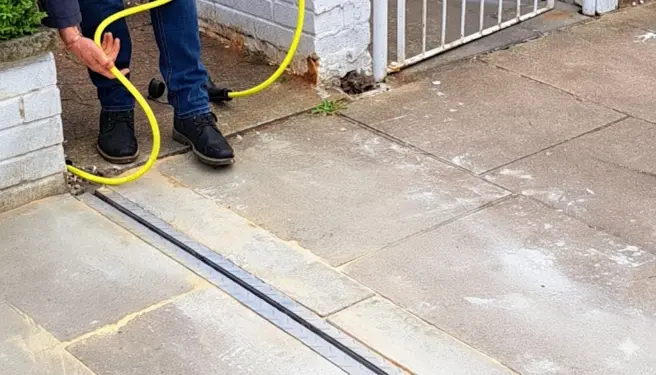
    Gul-E installation 1
    Gul-E installation
    Gul-E installation 2
    Gul-E installation
  3. You won't need planning permission if an EV channel is in the public highway/pavement or outside the residential curtilage.

    You must check with your local planning office if you need planning permission for your EV charge unit within your residential curtilage or garden, as it won't be permitted if you don't have off-street parking.

    Your home EV charger needs to be installed by a suitable qualified electrician who will provide you with an Electrical Installation Condition Report (EICR) on your home charger.

    You may also need permission if your property is a listed building, or within a conservation area.

     You may only need planning permission if:

    • your property affects designated heritage assets, such as listed buildings, conservation areas or article 4 direction
    • the works are where buildings and structures above the ground (that are related to the project) count as part of the active working development.

    If your home has off-street parking, you may have permitted development rights. However, you may still need planning permission. If you have no off-street parking, you need to apply as normal.

    We will assess your application with the intent to approve the installation, but you must secure any planning permission(s) that you need to install the home EV charger.

    Apply for planning permission

    You can apply for planning permission through your district or borough council:

    You can get pre-application planning advice through the planning departments of each council.

    If you're not sure who your local district or borough council is, you can check on GOV.UK.

  4. Download, complete and email the application form to us at highways.licensing@suffolk.gov.uk.

    You must check you meet all the criteria in step one before you apply.

    Please include an unobstructed photo of the pavement area outside your property and where you plan to have your charger installed. Please take your photos from the opposite side of the road, looking back at your property.

    Our engineer will conduct a site visit to check its suitability. We will then be in touch.

    A member of our team will visit you to check the site and assess whether its the best placement in relation to any existing street furniture (streetlights, metal railings, neighbouring EV channels etc).

    Other ways to apply

    You can also post it to us at:

    Suffolk Highways, Phoenix House, 3 Goddard Road, Ipswich, Suffolk, IP1 5NP

  5. An application costs £210.

    We recommend that you don't use Internet Explorer for our payment system as you may experience issues compared to other browsers.

    Your application won’t be processed until after you've paid the application fee.

    Other ways to pay

    Post your completed application form and cheque for £210 payable to Suffolk County Council to:

    Suffolk Highways, Phoenix House, 3 Goddard Road, Ipswich, Suffolk, IP1 5NP

    The process will be delayed by 7 days until the cheque clears.


After you have applied

Site visit

We will visit your home to check your application against the criteria and respond within 20 working days.

If you're refused

You will receive a response explaining the reasons for refusal. Even if your application is refused, you won't get a refund.

If you're accepted

 You will receive an approval letter. You'll then be able to get an accredited contractor to book road space and construct your chosen EV channel in the pavement.

The work must be completed in one year from the date of the approval letter. If not, you will have to submit a new application or apply for an extension.

What you are responsible for

Under the New Roads and Street Works Act 1991, any contractor working or excavating in the highway must have:

  • qualified supervisors and operatives, and

  • valid public liability insurance of at least £5 million.

As the applicant, you must make sure your contractor has the correct qualifications and insurance before work starts.

Your contractor must also contact the Traffic Management team before starting work to book road space.

We will check the contractor’s qualifications and insurance at this stage.

It is an offence to carry out work on the public highway (including public rights of way) without permission from the highway authority.

Inspection of your new EV channel

After the charging channel is installed, you must make sure that it is ready for inspection. We will check if it meets guidance and that it's in the approved location.

If it doesn't meet expectations, you'll be asked to put it right. If you don't, Suffolk Highways will do the work and charge you.

Please send us a copy of the Electrical Installation Certificate (EIC) from your installer within six weeks of being issued your licence.

Grants and more information

You can apply for a grant to help you pay for a residential chargepoint installation on GOV.UK.